How to Set / Restore Broken Pottery, Ceramic or Mainland china
It is possible to perform seamless repairs to damaged ceramic and pottery objects. The lesson below will address the offset two steps which are a) mending the broken pieces and b) filling and sanding the visible intermission lines, chips and gaps using the best commercially bachelor materials. This lesson applies but to non-porous or slightly porous materials such every bit porcelain, stoneware, resin and drinking glass.
Pottery Repair Video Tutorial
When repairing more porous materials such Terra cotta, stone or plaster, epoxy is required to be placed on both sides and heating the surface to 100 - 140 degrees F prior to the epoxy application on both sides of the object improves bonding. Be aware, heating surfaces speeds up cure time and therefore reduces workability. You have to achieve proper positioning twice as fast equally you would with porcelain and stoneware. The sanding process of porous materials is also different than what is described below.
If you choose to do it yourself, this tutorial / lesson will assistance you in repairing your cleaved ceramic object using available materials and tools, saving you the price of professional person repair. If yous make up one's mind to apply our repair services, we will exist glad to provide you with an estimate for the repair. You may desire to detect out the value of your cleaved ceramic or porcelain figurine or vessel first earlier investing in repairing it.
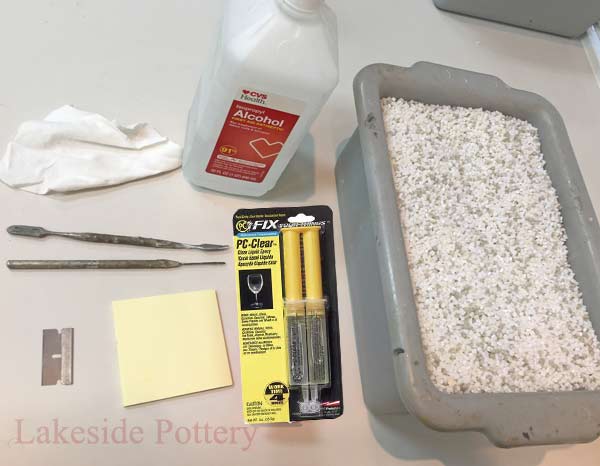
What you will need for mending steps: 1. Ii-office five min PC Clear epoxy two. Wooden stick or a pin-tool iii. Container with pvc pebbles or rice iv. Clay v. Razor blade half dozen. Denatured or 91% Alcohol vii. Rag viii. Newspaper pad to mix Epoxy on
Important: Ceramic restoration materials are not food condom, liquid or oestrus proof (over 190 degree F) and repaired items should non be used on cooking or food serving ware more...
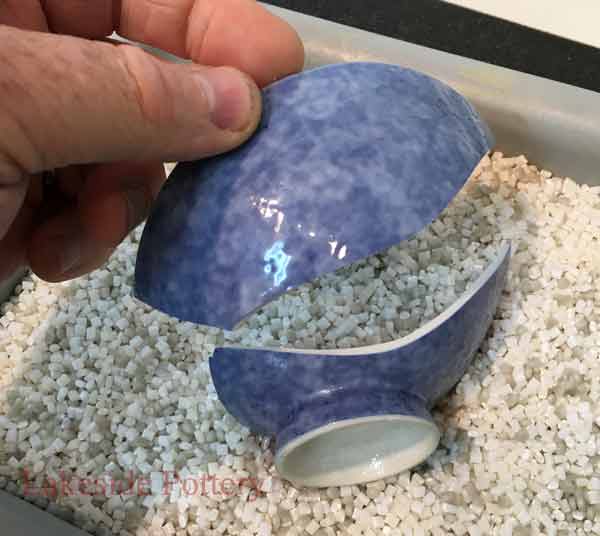
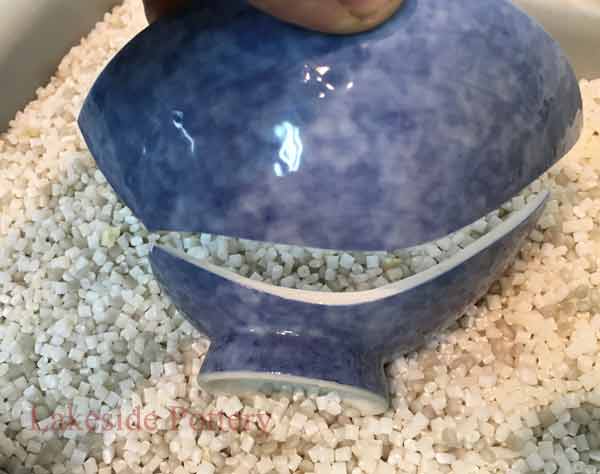
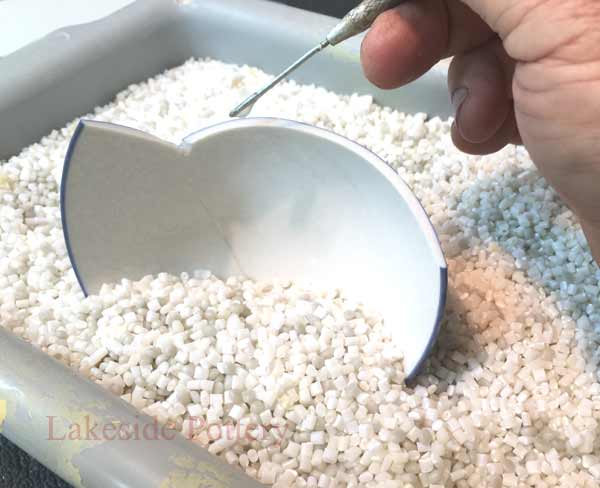
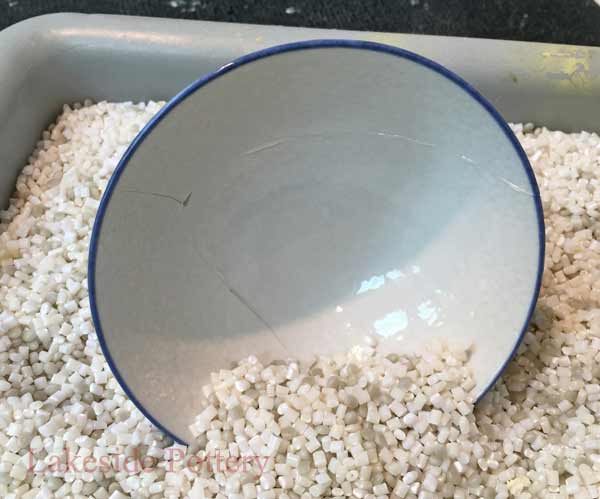
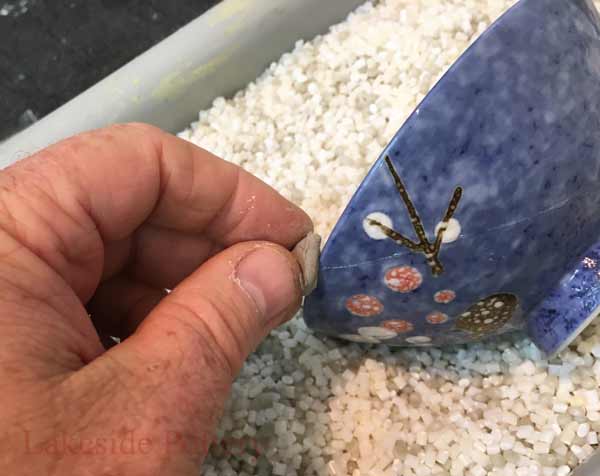
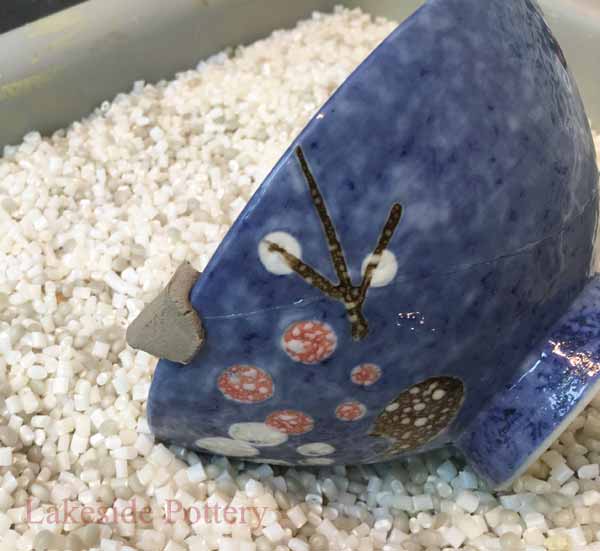
To lucifer placement of broken pieces so that gravity alone can keep proper alignment, fill up a container, that is slightly larger than the piece you want to prepare with plastic pebbles, rice, or sand. This will cradle and hold the repaired slice all the same and in place while it cures.
Where to become supplies
Make certain the pieces are clean using booze. If the item has been fixed before clean off any quondam adhesive, or the new adhesive may not bond properly. Instruction to remove one-time adhesives. Fill a container, that is slightly larger than the piece you want to prepare with plastic pebbles, rice, or sand. This volition cradle and hold the repaired piece withal and in place while it cures.
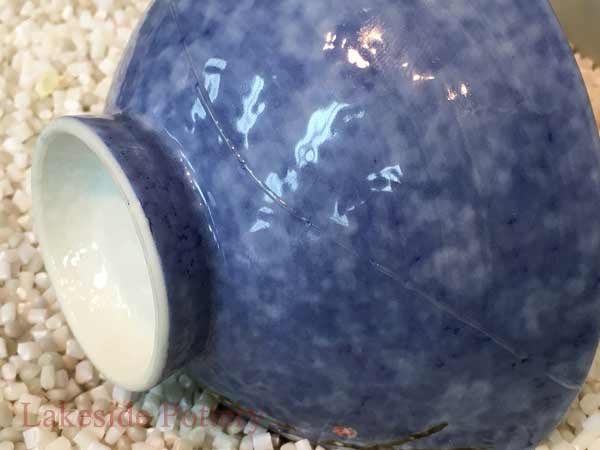
Place the larger broken office in the PVC pebbles / resin pellets (rice or sand) so that gravity will concur the top piece in place. Verify fit before applying adhesive.
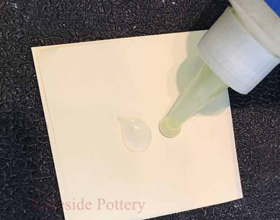
Place even amounts of 5-minutes clear epoxy on a newspaper or paper-thin pad
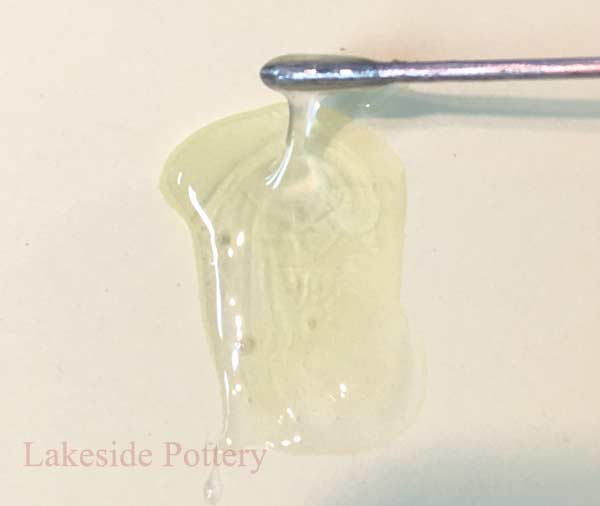
Mix epoxy well with a pin tool, paper clip or a wooden stick.
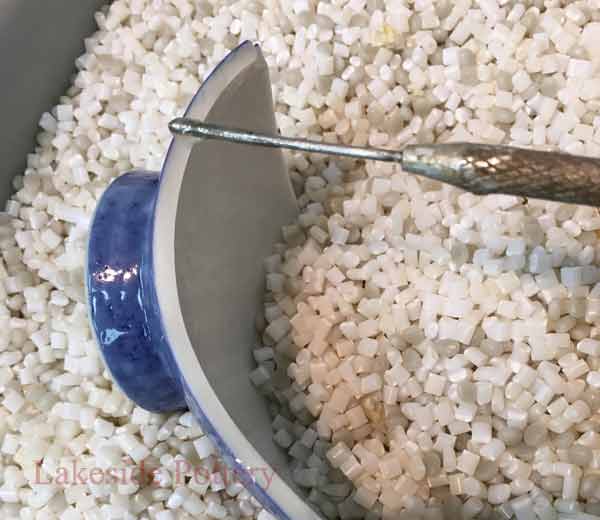
Utilize epoxy mix to one side using a pintool or a wooden stick. Employ but enough adhesive to cover the edge. Too niggling will leave gaps, resulting in a weak repair
Place cleaved piece over the epoxy. Of import: You have only about 60-90 seconds from start of epoxy mixing to consummate the broken slice's permanent placement before the epoxy becomes gummy and not workable
Rapidly bring together the pieces together while applying low-cal pressure to squeeze actress epoxy out. Apply tweezers to apply small pieces. You but accept about 60–90 seconds from start of epoxy mixing to placement before the epoxy becomes gummy and unworkable. Do non wipe off the squeezed-off epoxy to avoid smearing. Look at least twenty minutes before proceeding with the adjacent slice.
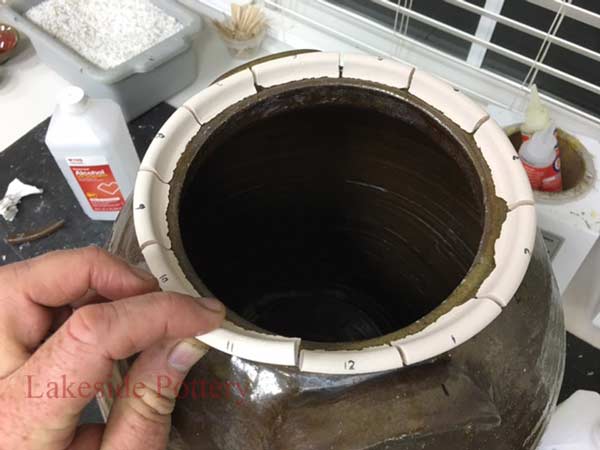
If your item is broken into more than a couple of pieces, plan the attachment sequence to avoid beingness left with a final piece that cannot be easily fastened or fit in. Numbering the pieces afterwards a dry out run is a good idea and will aid in the actual implementation. Let each joint cure earlier repairing the next one.
Verify that pieces tin can stay steady during the cure period (permit it cure at 75 degrees F or warmer)
If pieces exercise not concord well using gravity, use clay for additional back up
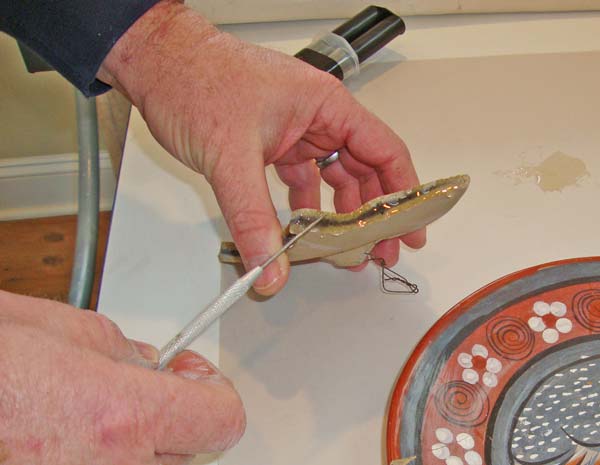
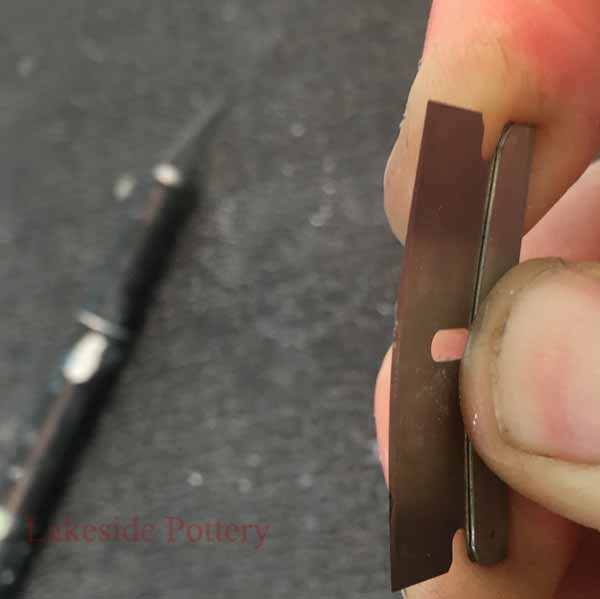
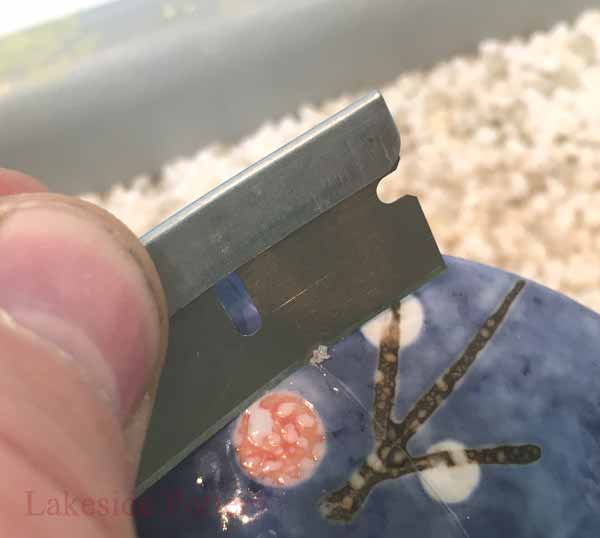
Let the epoxy cure for threescore or more minutes before removing backlog cured epoxy with a bract
Make clean surfaces with alcohol for proper filler bonding
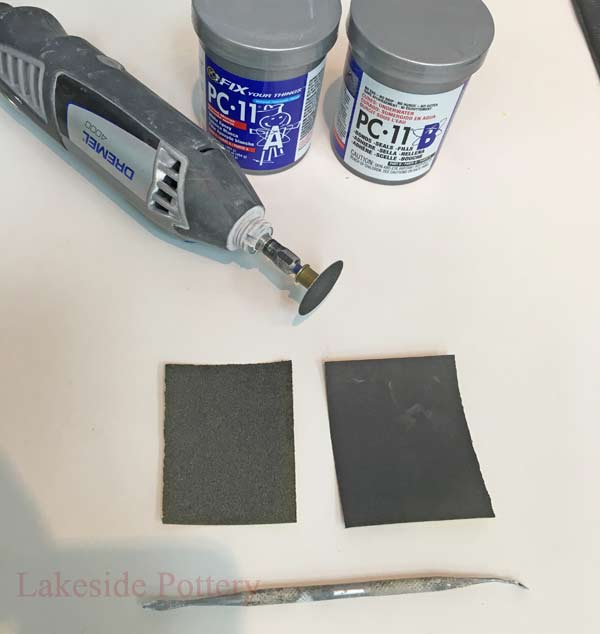
What you will need for filling steps: 1. Ii parts Epoxy filler PC-xi 2. Dremel EZ lock 120 grit disc 3. 220 grit sand paper 3. 400 grit sand paper 4. Rag 5. Mini Spatula six. Paper pad to mix Epoxy on 7. Denatured or 91% Booze
Where to get supplies
IMPORTANT: Ceramic restoration materials are non food-condom, liquid or heat-proof (over 190 degrees F) and repaired items should not be used on cooking or food serving ware more...
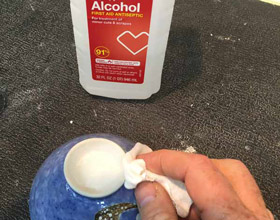
Wipe all surfaces with a 91% alcohol to remove dust and mitt oils prior to applying filler epoxy
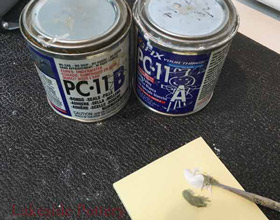
Mix even parts of PC-11 epoxy filler. For ease of application, piece of work in room temperature of 75 degrees F or warmer. Nosotros place the PC-eleven in a minor heater and go along it at 100 degrees F.
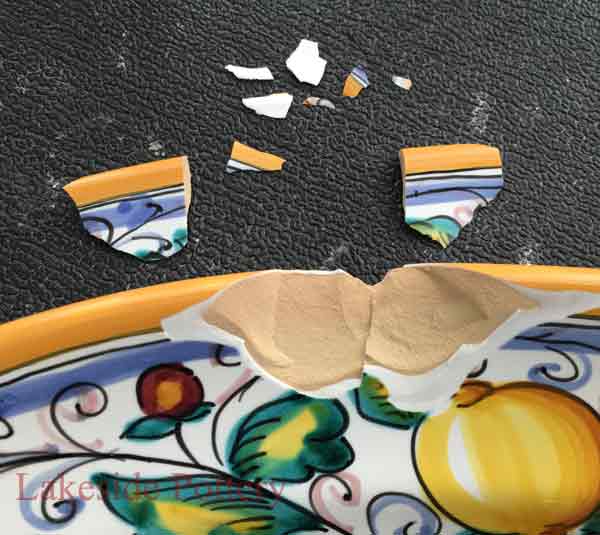
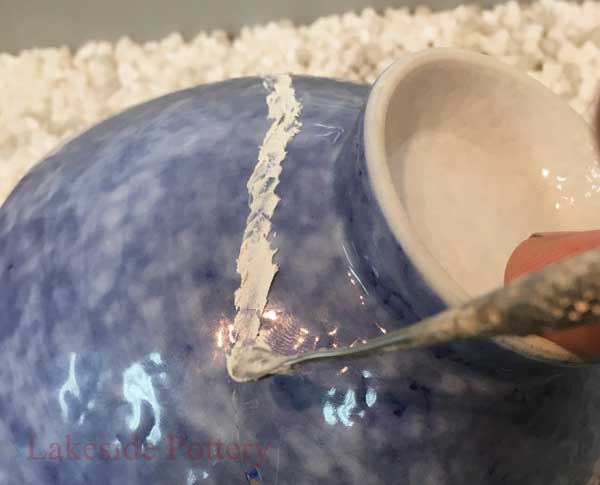
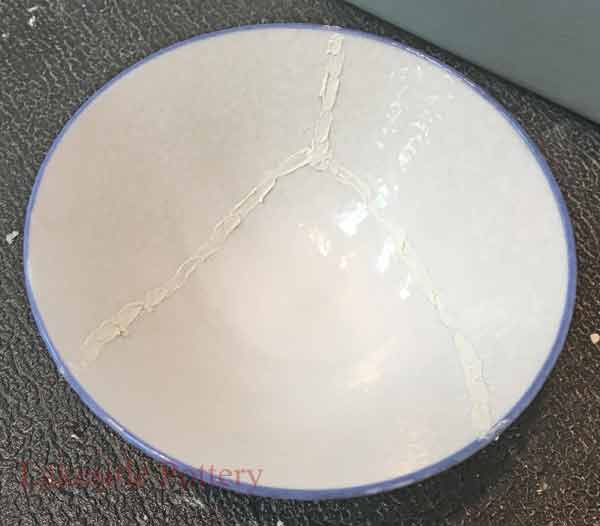
Use sparse layer of filler while pushing in to fill up cracks and missing fragments
Allow filler epoxy to cure for 12 hours or more at a temperature of 75 degrees F or warmer. We identify our filled projects in a 140 degrees F oven over nighttime.
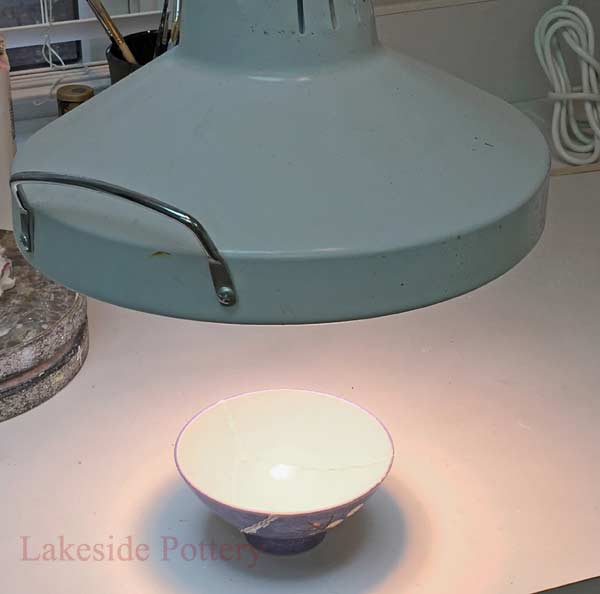
Placing under a lamp is another good option to optimize hardness for better sanding performance. Identify at to the lowest degree 12" away from repair item to avoid overheating.
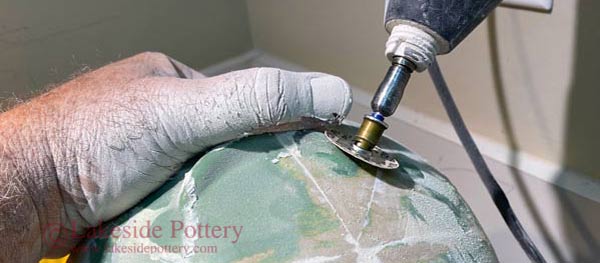
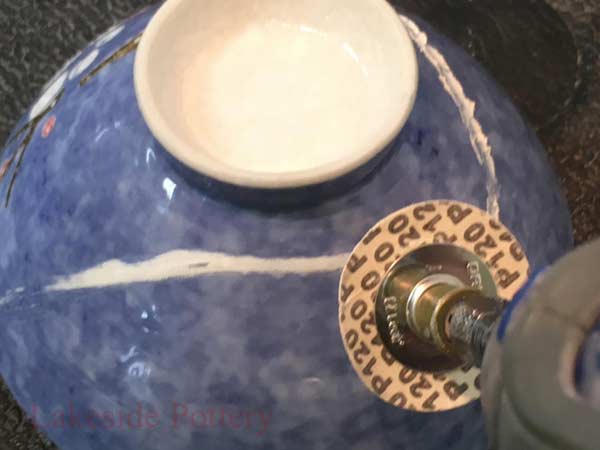
Use Dremel EZ lock sanding disc 120 grit for sanding Warning - vesture protective eyewear
Use depression speed to avoid burn marks and use light force per unit area
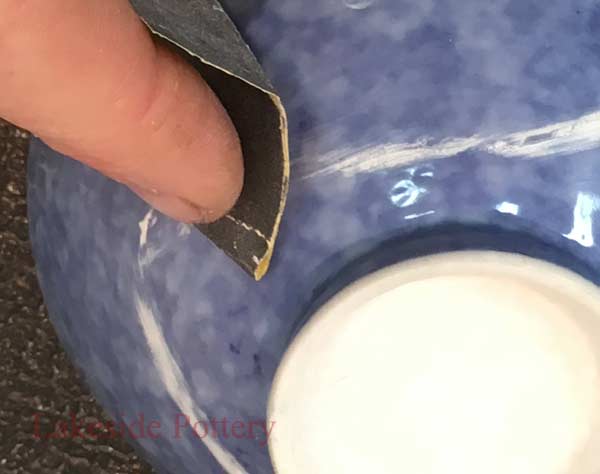
If sanding past manus, showtime with 220 grit sandpaper and finish with 400 grit
If upon inspection, missed cracks are found, echo the steps above for the selected areas
Make clean with booze to prepare the surface for painting and common cold glazing
To hide the repair lines for a seamless repair, painting and application of 'Common cold Glaze' are required and more details can be seen in our Painting Lesson
A Video Lesson That Includes How to:
Remove old repair,
Mend the broken segments,
Fill up gaps,
Sand filler,
Paint and glaze
More Details
Choosing your adhesive Specific kinds of adhesives are generally used to mend ceramics. We recommend clear, v minute setting two-function epoxy. At that place are cases where a slower setting epoxy will work amend. In order to choose the right adhesive for a ceramic repair, y'all must showtime identify the type of ceramic involved. Because an exact fit is essential in repairing ceramics, you lot must adjust the pieces precisely before the mucilage sets. Five-minute epoxies and instant glues might cure too fast and are not recommended if y'all demand longer time to match and suit a precise fit. We employ different adhesives for different applications. For the purposes of this tutorial, we recommend more commercially available brands that are listed in our Where to Buy Ceramic Repair Materials.
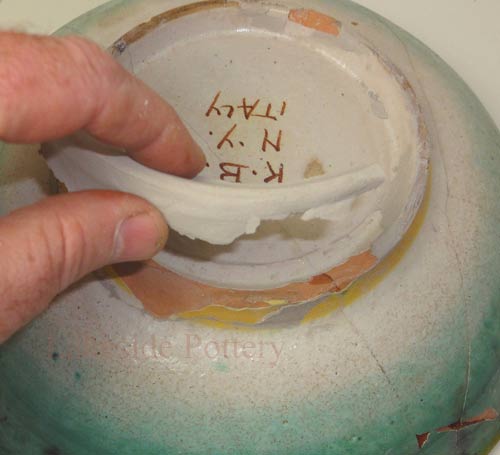
Preparing the surface The most important step in repairing a broken ceramic is to make certain the pieces are clean. If the item has been fixed before, undo the old repair (see how to remove erstwhile agglutinative lesson), or the new agglutinative may not bond. Before handling the pieces, yous may desire to put on clean gloves to protect your hands from abrupt edges. Clean the pieces with alcohol.
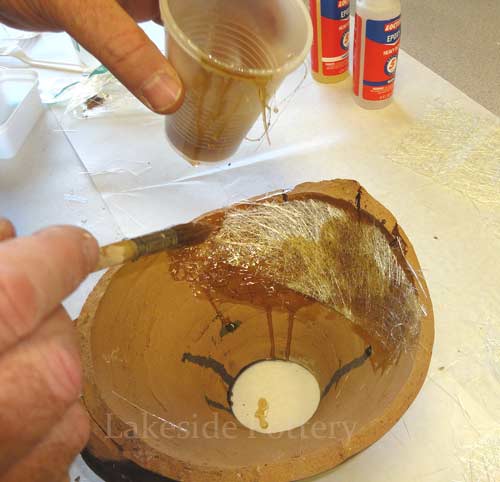
Applying the agglutinative Using a wooden stick, paper clip or a pin tool, apply mucilage to simply i of the broken edges. Use just enough adhesive to cover the edge. Too niggling will leave gaps, resulting in a weak repair; too much volition brand it difficult to attain a tight joint. Warming up the ceramic pieces to 110-140 degrees F volition thin the epoxy, creating a better fit, merely will outcome in a faster cure time. Quickly join the pieces together while applying light pressure squeezing extra glue out. Fill a container with plastic pebbles, rice, or sand which will hold the repaired piece in place while it cures. Use clay every bit illustrated above to hold the pieces together if gravity alignment is not possible. Avoid shifting the pieces; small particles may come up loose, ruining the repair. Any glue that oozes from the articulation tin can be removed later using a razor blade. Yous may use tweezers to employ small pieces.
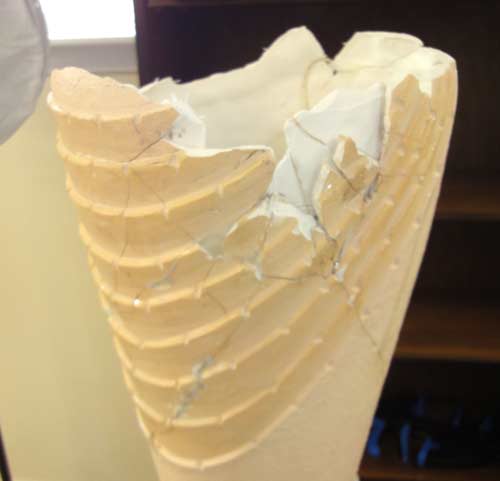
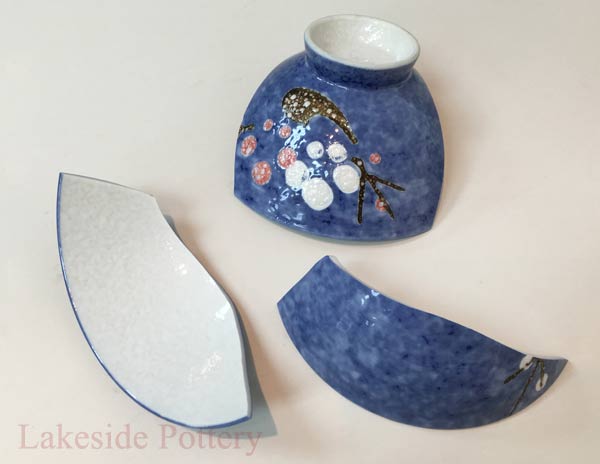
Fixing an particular with multiple breaks If yous have a piece of pottery, ceramic or porcelain that is cleaved into more than a couple of pieces, plan the sequence in which you lot will attach each piece to avoid existence left with a final slice that cannot be easily fastened. Numbering the pieces afterward a dry-run is important and volition assistance in the actual implementation. Let each joint cure earlier repairing the side by side one.
Filling in for missing pieces We use dissimilar products and the choices are too numerous to list here. PC-11 filler is a very practiced choice and is more commercially available. The key elements with fillers are:
A) Exceptional adhesion B) Will not shrink while curing C) Workable - tin can be drilled and sanded D) Paintable E) Water / oil proof F) Will tolerate broad temperature range without shrinking or expanding. We let the filler epoxy cure at 140 degrees F enabling the filler to cure very hard which is optimal for sanding.
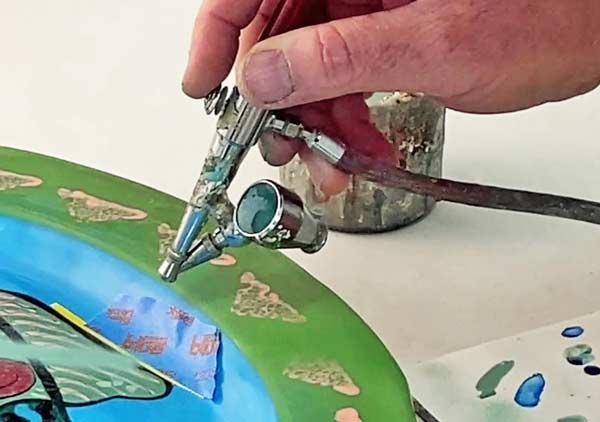
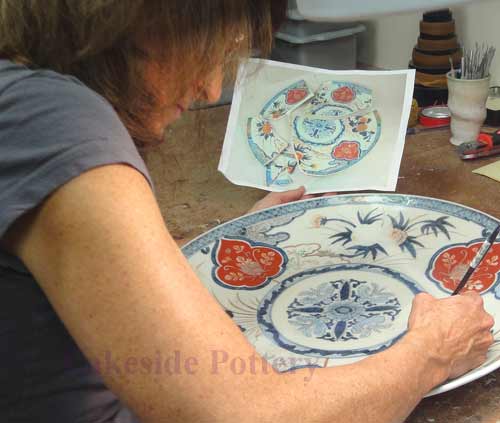
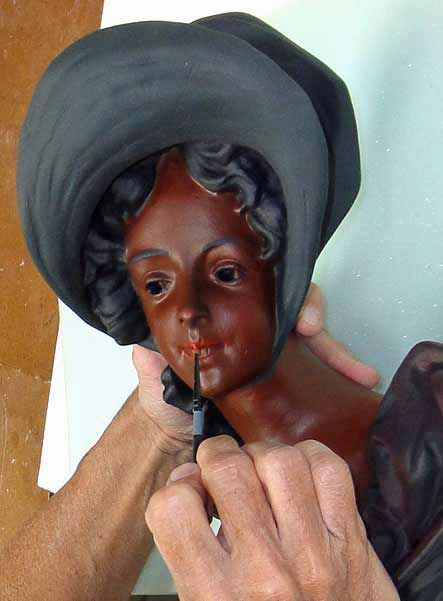
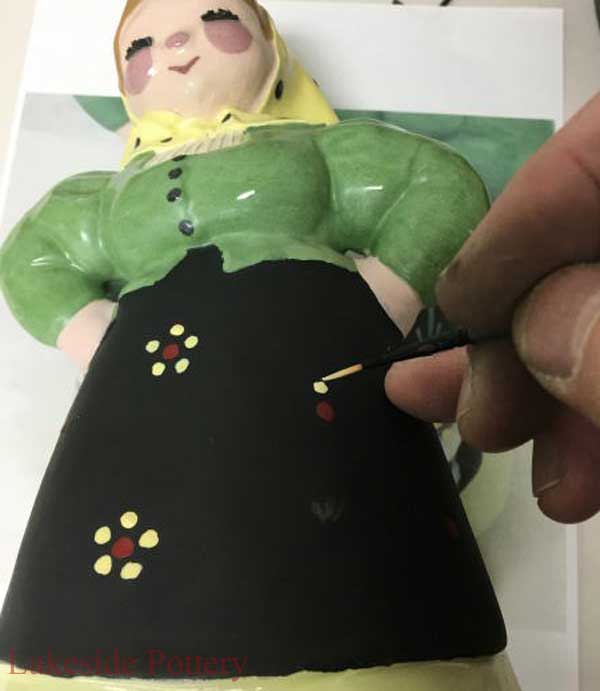
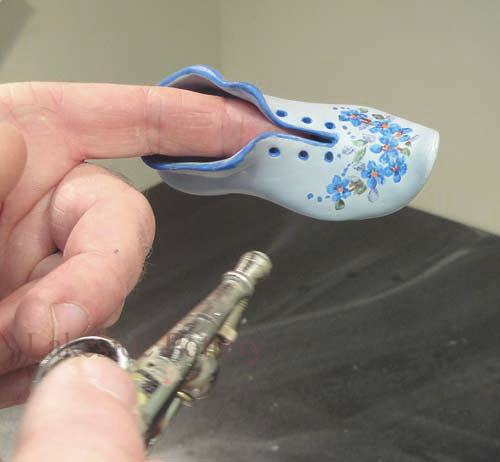
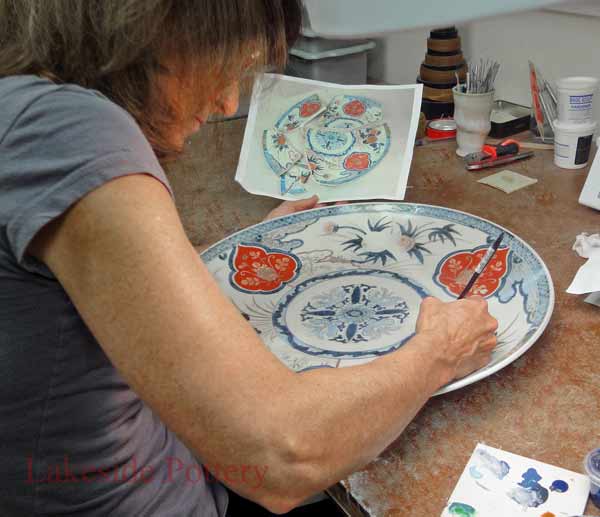
Painting / color touch upwards If the repair lines are non acceptable to you, and a seamless repair is desired, the required skill is much greater. Color matching and re-creating an artist's work and manner takes time. We use loftier cease acrylic paints or coloring pigment powders and colored hardeners, mixed with the proper additives to create strength. And finally, it is essential to match the glaze sheen and the right light reflection to emulate the broken item'south glaze bear on as shut as possible - See painting theory tutorial.


















.jpg)

0 Response to "How To Repair Talavera Tile"
Post a Comment